
A power steering assist fault might not seem like the end of the world. In actuality, it’s likely not compared to other things your vehicle will encounter.
However, you should still give it your full and immediate attention.
If your car’s suffering from a power steering assist fault, I will tell you how to repair it in this simple guide. I will also walk you through how power steering works and why the issue will affect your vehicle control.
I’m prepared to alter the text you provide. Please share the text you’d like me to modify, and I’ll change a maximum of 2 adjectives as per your instructions.
Table of ContentsShow
Bottom Line Up Front: Fixing Power Steering Assist Fault

In short: you’ll need to replace the particular component that’s damaged. You might also need to top the hydraulic fluid up or have some thorough ECU diagnosis.
Whatever the issue is, take it straight to a dependable mechanic for inspection. The car isn’t safe to drive.
What Is Power Steering?
Power steering is found in virtually every modern car. The only exceptions might be certain specialized track-day models.
You might not think about it most of the time, but power steering is aiding you. As in, a considerable deal.
Without power steering, the steering wheel would be extremely hard to turn. Well, it’s far from impossible – people have managed it for decades – but it’s much more difficult than what you’re used to.
Power steering ‘assists’ you by boosting the amount of force on the steering rack. It essentially pushes in the same direction you’re turning.
There are two categories of power steering systems: hydraulic and electronic. The source of the defect depends on which of these your vehicle has.
How Hydraulic Power Steering Works
Hydraulic power steering operates using power steering fluid. You’ll see this when you lift the hood. The reservoir cap often has a steering wheel icon or says “Power Steering Fluid.”
The hydraulic power steering fluid is pressurized by the power steering pump. It’s directed by the control valve. More on that in a short moment.
The steering rack sits inside a cylindrical housing, along with several O-Rings and pressure regulators. It has a ring jutting out in the middle. This seals against the cylinder and acts as a piston once the power steering pump and control valve begin operating.
The control valve, situated just before the pinion gear that connects to the rack, regulates which side of the piston the hydraulic fluid is directed to.
For example, if it’s sent to the left side (and the right side isn’t pressurized), it’ll push the piston right. That’s what occurs when you turn your steering wheel counter-clockwise to steer to the left.
The opposite is also true, of course.
How Electric Power Steering Works
Electric power steering (or EPS, also known as EPSA) operates a bit differently.
I need you to provide the text you’d like me to edit. The message you sent appears to be incomplete – it only says “There are various kinds:” but doesn’t include the full text you want me to modify.
- Steering column-mounted EPS
- Rack-mounted EPS
Steering column-mounted EPS is used on light-duty vehicles such as compact cars. If you have something a bit larger, such as a truck or 4×4, you’re more probable to have rack-mounted EPS.
They each function based on the identical principles.
When you turn the steering wheel, a torque sensor records how much effort you’re putting in. The ECU takes this reading and drives the EPS electric motor to “add” power to the steering rack.
The EPS motor can be attached to the steering column or rack (hence the two types).
Crucially, the motor doesn’t stand in between anything mechanical. If it fails, you’ll lose power steering but should still be able to drive to a secure location.
One final thing. If your car has an electric power steering system, you won’t have any hydraulic fluid or engines.
Symptoms Of Power Steering Assist Fault

When you detect a power steering assist failure, you may notice the following symptoms:
- Warning light on the dashboard
- Difficulty turning the steering wheel (especially at low speeds)
- Vehicle pulling to one side when driving straight
- Unusual sounds (such as whining) while turning (hydraulic systems)
- Hydraulic fluid leaks visible under the car (hydraulic systems)
- Whining noise when you start the car (hydraulic systems)
- The steering wheel feels unusually light at high speeds (electric systems)
- Other electrical issues (signs of ECU failure – electric systems)
What Does ‘Power Steering Assist Fault’ Mean?

‘Power Steering Assist Fault’ means – as you might expect – there’s something incorrect with your power steering system.
The exact fault could be anything in the electric steering assist system.
Certain issues appear in hydraulic systems; others raise their heads in electrical ones. Here are some of the most frequent culprits, organized by type.
Hydraulic Power Steering Assist Faults
Hydraulic power steering typically fails in one of two primary ways:
- Hydraulic fluid leak
- Power steering pump failure
It’s also possible, but uncommon, for the power steering control valve to stop working. This should only happen if dirt and debris somehow get into the fluid reservoir.
Hydraulic Fluid Leak

Hydraulic fluid leaks are relatively common. One of the usual culprits is the bushing and O-Ring sealing the hydraulic fluid into the cylinder and around the steering rack.
Having mentioned it, leaks may occur from any source. Broken pipes, cracks, the controller, and even the tank could seep and release hydraulic fluid.
Typically, though, leaks stem from deteriorated rubber seals.
Hydraulic fluid is a distinctive crimson color. Don’t get it mixed up with brake fluid, although if that’s leaking, that’s an even more severe problem.
With a hydraulic fluid leak, there won’t be any fluid to assist you as you turn.
Power Steering Pump Failure

The power steering pump is driven by the engine’s serpentine drive belt. It pressurizes the hydraulic fluid, enabling the control valve to direct it between the input and output lines.
It might not be the pump itself. Since the pump is driven by the belt, it or the associated pulley might have issues, too.
Without a power steering pump, there’s no hydraulic force. The control valve might still open, but there’s nothing to drive the steering rack in either direction.
Although you’ll still have the ability to drive, it will require significantly more effort to turn the steering wheel.
Electric Power Steering Assist Faults
There are three main components in the EPS system. Any of them could fail, but the electric motor is most likely.
- Electric motor failure
- Torque sensor problem
- ECU issue
Electric Motor Failure

The electric motor is responsible for adding torque to the steering column or rack. If it stops functioning, it won’t be helping you.
The frequent reason for EPS motor failure is overheating. It’s a motor, so this is always probable.
One of the most probable situations for the EPS motor to overheat is when you’re doing a lot of vigorous steering. Examples could include racing or going through a slalom at elevated speeds.
It could also fail more generically, of course. For instance, the bushes could wear out, or an electric connection could corrode.
Torque Sensor Problem

The torque sensor is responsible for recording how much rotational force (“torque”) the driver puts through the steering wheel.
The ECU takes these readings and converts them into instructions (if you like) for the engine.
The sensor might record too much/little torque. This could result in excessive or insufficient assisting of the steering. If the car registered this, it would display a power steering assist malfunction.
ECU Issue
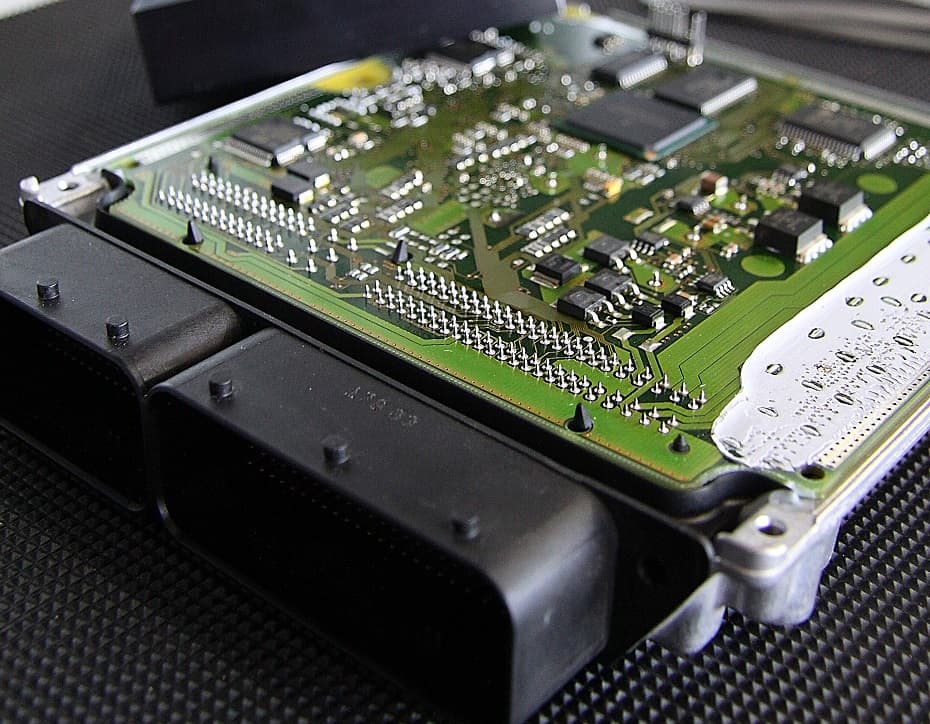
The ECU receives raw data from the torque sensor. It then uses that information to control the motor.
The torque sensor information might be entirely fine. However, if a fault develops in the ECU, it might give the motor excessive (or inadequate) power.
Is A Power Steering Assist Fault Serious?
A power steering aid fault should be rapidly addressed. It isn’t as crucial as, say, a head gasket failure, but it still needs inspecting.
Put it this way: if you can see there’s a power steering assist malfunction, either from a warning light or the text appearing on your display, act.
Manufacturers don’t design cars to inform drivers of alerts just for amusement. If it’s crucial enough for the vehicle to need to warn you, it requires fixing.
The primary danger of ignoring a power steering assist fault isn’t damage to your steering system. Rather, you’re more likely to run into problems with, well, colliding.
Without power steering, maintaining your vehicle’s control is far more challenging. That’s why fixing it as soon as possible is essential.
You can typically drive with a power steering assist fault unless it’s substantially impacting your ability to drive safely. If in doubt, contact your mechanic and ask them, or book a mobile technician.
How To Fix Power Steering Assist Fault

Some want to know how to reset a power steering assist fault warning light. While you can always clear the codes with an OBD II code reader, you won’t really resolve the issue.
Don’t do this until the fundamental issue has been resolved and fixed. It’s best to leave it to a mechanic, anyway.
Here are a few recommendations on how to repair a power steering assist defect.
In general, you’ll need to replace the damaged part, swapping it out for a fresh one.
Also, don’t forget to check for any resulting damage done to the steering rack, as improbable as it is.
Hydraulic Power Steering Fixes
- When you suffer a hydraulic fluid leak, it should be as simple as finding the leak and replacing the part. This usually involves new rubber seals but could be any power steering component.
- You’ll need a new part if your car has a power steering pump failure. The technician might also inspect the pulley and serpentine belt to ensure they work properly. This might cost around $500 to $600.
Electric Power Steering Fixes
- If the EPS electric motor fails, you usually need a new one. This requires disassembly of the steering column and switching in a new part. This should be around the same cost as a pump replacement – possibly a little more. Expect to pay $500 to $600.
- The same applies if the issue lies with your torque sensor. Mechanics will strip away the dashboard to expose the column. They’ll then switch the torque sensor for an OEM replacement. It should cost about the same as the motor, $500 to $600. If you have both done at the same time, it’ll be much less expensive.
- Unfortunately, ECU issues are very in-depth and, therefore, expensive – probably over $1,000. This isn’t something you can hope to fix yourself. If you need a new motor or torque sensor, you might need some minor ECU work to go along with it. Expect to pay $500 to $1,000 for this.
Rounding Up: Why To Fix Power Steering Assist Fault As Soon As Possible

If your car has a power steering assist defect, get it inspected and repaired as soon as possible.
Most power steering problems aren’t immediately dangerous. There are exceptions, though, especially with electronic systems.
If you’re in doubt, take your car to a shop on a flatbed trailer. If needed, you could also call a mechanic to your home or workplace.
Don’t take any risks. Get a power steering assist fault repaired as soon as you are capable.


