
I apologize, but you haven’t provided any content for me to modify. If you’d like me to change adjectives in a particular piece of text, please provide the text and I’ll be happy to make the requested changes.
Engine oil (motor oil) will catch fire if exposed to high temperatures.
This is typically between 300°F (150°C) to 495°F (258°C).
Are you concerned that engine/motor oil is flammable?
The brief answer is, technically, no. Motor oil is combustible. This classification means it’s somewhat less likely to catch fire than something “flammable.”
**That said, engine oil will still catch fire if exposed to sufficient temperatures**. You should always store it well away from anywhere hot or anything likely to ignite.
In this essential manual, I will guide you through the dangers of fire from motor oil.
Table of ContentsShow
What Is The Flash Point Of Motor Oil?

The flash point of a fluid is the minimum temperature at which it emits vapors that could ignite.
The flash point of engine oil can be anywhere between 300 and 495 degrees Fahrenheit.
The accepted maximum threshold to be considered flammable is 199.4 degrees Fahrenheit. It’s obvious that motor oil exceeds this.
Compare this to gasoline. Gasoline is considerably more flammable and has a flash point of about 40 degrees Fahrenheit.
**Motor oil, refined from raw crude oil, has a high combustion point. This is due to its lengthy hydrocarbon chains**.
You could think of it as “denser” than most flammable liquids. Longer, heavier chains require more energy (heat) to vaporize.
Because of this, it’s significantly less likely to ignite (except in uncommon circumstances).
Does Car Oil Burn?

Usually, motor oil doesn’t get too hot, about 300 degrees at most. But if something goes wrong with your engine, like the piston rings break or the head gasket fails, the oil could end up in the combustion compartment.
It will ignite and produce a cloudy smoke that has a blue/gray hue.
This is an urgent cause for concern. You should drive directly to your local mechanic.
**In short, yes. The oil in your engine will burn if exposed to sufficiently high temperatures**.
Is Used Motor Oil More Flammable?
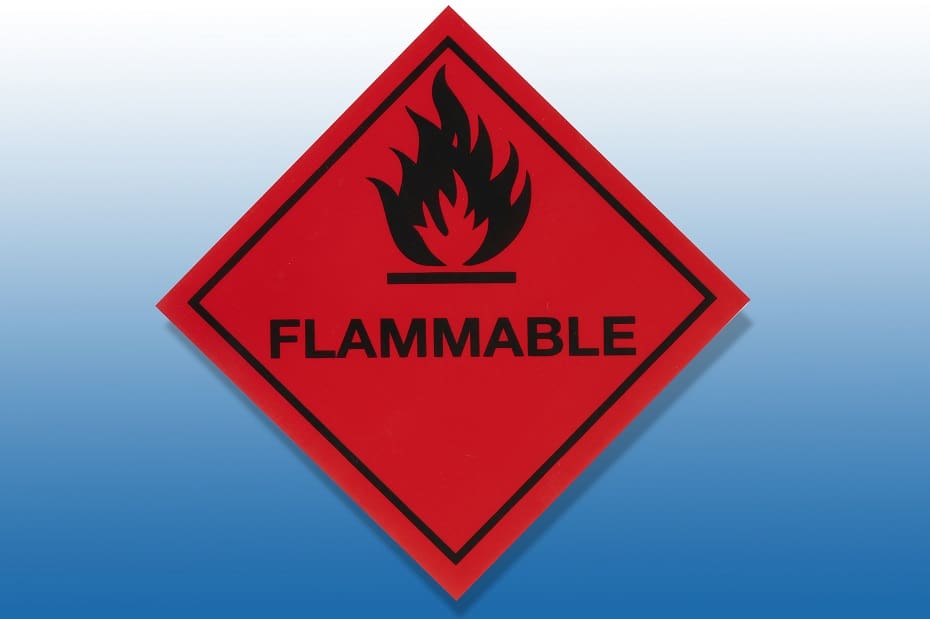
Used motor oil isn’t any more likely to ignite than new oil.
Over time, used motor oil does lose its viscosity. It’s more likely to blend with gasoline vapors.
Still, the fluid has a very high flash point, meaning it will only catch fire under extreme temperatures.
Again, it’s technically correct to refer to engine oil as “combustible” rather than “flammable.”
Is Synthetic Oil Flammable?

**Synthetic oil (used in most cars these days) is somewhat less likely to ignite than traditional oil,** in general.
It typically requires elevated temperatures for combustion. As such, the flash point and fire point are raised.
All types of engine oil have a very elevated flash point. You shouldn’t worry about spontaneous combustion, although do maintain some basic common sense.
For example, storing motor oil next to a blazing exhaust or wood stove wouldn’t be wise.
Can You Burn Motor Oil?

It’ll be exceedingly hard to burn motor oil by itself. It’s more likely to burn if you soak another material in the oil (for example, a cloth). It’ll still be difficult to get it hot enough to ignite.
Although it’s possible, you shouldn’t ever burn motor oil. It’s polluting and hazardous to your health. The smoke also contains a high carbon monoxide content.
Instead of incinerating oil, dispose of it according to local governmental regulations. You typically need to take all used oil to an oil disposal center.
How Should You Store Motor Oil?

Follow a few basic principles to store your motor oil safely.
- Keep it well away from sources of heat or ignition (such as those mentioned above).
- Ensure the area is well-ventilated to remove vapors.
- Store it on a sump. Most official oil storage locations (like an auto shop) will store oil on a grate over a sump. If any of it leaks or spills, it’s safe.
- Clean up spillages immediately. Use granules or sawdust for this.
Is Motor Oil Flammable? Conclusion
While motor oil might not be flammable in technical terms, it can still catch fire. You should still store it carefully and not hold more than you need.
If you notice your car burning oil – which isn’t that uncommon, particularly on older cars – head straight to a mechanic. You might have a significant problem. The quicker it’s identified and remedied, the cheaper it’ll be.
Finally, don’t incinerate motor oil. It’s hazardous and poisonous. Always dispose of it in the recommended, secure manner by heading to a recycling plant.


